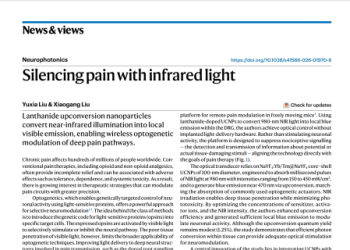
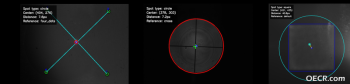
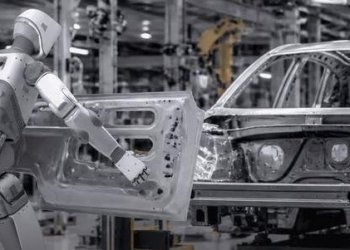
激光清洗的例子

3.7k 13
发表于 2004-8-24 00:03:00|上海 | 查看全部 阅读模式
38xHSLoe.pdf (169.62 KB, 下载次数: 111)

回复|共 13 个

photonman Lv.9 发表于 2004-8-25 01:23:00|欧洲 | 查看全部
Authors: Drakaki, E; Karydas, AG; Klinkenberg, B; Kokkoris, M; Serafetinides, AA; Stavrou, E; Vlastou, R; Zarkadas, C
Title: Laser cleaning on Roman coins
Source: APPLIED PHYSICS A-MATERIALS SCIENCE PROCESSING, 79 (4-6): 1111-1115 SEP 2004
KeyWords Plus: ARCHAEOMETRY; CORROSION; METALS; ART
Abstract: Ancient metal objects react with moisture and environmental chemicals to form various corrosion products. Because of the unique character and high value of such objects, any cleaning procedure should guarantee minimum destructiveness. The most common treatment used is mechanical stripping, in which it is difficult to avoid surface damage when employed. Lasers are currently being tested for a wide range of conservation applications. Since they are highly controllable and can be selectively applied, lasers can be used to achieve more effective and safer cleaning of archaeological artifacts and protect their surface details. The basic criterion that motivated us to use lasers to clean Roman coins was the requirement of pulsed emission, in order to minimize heat-induced damages. In fact, the laser interaction with the coins has to be short enough, to produce a fast removal of the encrustation, avoiding heat conduction into the substrate. The cleaning effects of three lasers operating at different wavelengths, namely a TEA CO2 laser emitting at 10.6 mum, an Er:YAG laser at 2.94 mum, and a 2omega-Nd:YAG laser at 532 nm have been compared on corroded Romans coins and various atomic and nuclear techniques have also been applied to evaluate the efficiency of the applied procedure.
Reprints: DRAKAKI E,NATL TECH UNIV ATHENS,DEPT PHYS;ZOGRAFOU CAMPUS; ATHENS 15780, GREECE. edrakaki@central.ntua.gr
Research Institutions: Natl Tech Univ Athens, Dept Phys, Athens 15780, Greece. NCSR Demokritos, Inst Nucl Phys, Tandem Accelerator Lab, Lab Mat Anal, GR-15310 Athens, Greece.
Discipline: APPLIED PHYSICS/CONDENSED MATTER/MATERIALS SCIENCE SEMICONDUCTORS SOLID STATE MATERIALS TECHNOLOGY
CC Editions / Collections: Physical, Chemical Earth Sciences (PCES); Electronics Telecommunications Collection (EC)
Language: English
Document type: Article
IDS No.: 839EL
Publisher: SPRINGER, 233 SPRING STREET, NEW YORK, NY 10013 USA, http://www.springer-ny.com
photonman Lv.9 发表于 2004-8-25 01:23:00|欧洲 | 查看全部
Authors: Drakaki, E; Karydas, AG; Klinkenberg, B; Kokkoris, M; Serafetinides, AA; Stavrou, E; Vlastou, R; Zarkadas, C
Title: Laser cleaning on Roman coins
Source: APPLIED PHYSICS A-MATERIALS SCIENCE PROCESSING, 79 (4-6): 1111-1115 SEP 2004
KeyWords Plus: ARCHAEOMETRY; CORROSION; METALS; ART
Abstract: Ancient metal objects react with moisture and environmental chemicals to form various corrosion products. Because of the unique character and high value of such objects, any cleaning procedure should guarantee minimum destructiveness. The most common treatment used is mechanical stripping, in which it is difficult to avoid surface damage when employed. Lasers are currently being tested for a wide range of conservation applications. Since they are highly controllable and can be selectively applied, lasers can be used to achieve more effective and safer cleaning of archaeological artifacts and protect their surface details. The basic criterion that motivated us to use lasers to clean Roman coins was the requirement of pulsed emission, in order to minimize heat-induced damages. In fact, the laser interaction with the coins has to be short enough, to produce a fast removal of the encrustation, avoiding heat conduction into the substrate. The cleaning effects of three lasers operating at different wavelengths, namely a TEA CO2 laser emitting at 10.6 mum, an Er:YAG laser at 2.94 mum, and a 2omega-Nd:YAG laser at 532 nm have been compared on corroded Romans coins and various atomic and nuclear techniques have also been applied to evaluate the efficiency of the applied procedure.
Reprints: DRAKAKI E,NATL TECH UNIV ATHENS,DEPT PHYS;ZOGRAFOU CAMPUS; ATHENS 15780, GREECE. edrakaki@central.ntua.gr
Research Institutions: Natl Tech Univ Athens, Dept Phys, Athens 15780, Greece. NCSR Demokritos, Inst Nucl Phys, Tandem Accelerator Lab, Lab Mat Anal, GR-15310 Athens, Greece.
Discipline: APPLIED PHYSICS/CONDENSED MATTER/MATERIALS SCIENCE SEMICONDUCTORS SOLID STATE MATERIALS TECHNOLOGY
CC Editions / Collections: Physical, Chemical Earth Sciences (PCES); Electronics Telecommunications Collection (EC)
Language: English
Document type: Article
IDS No.: 839EL
Publisher: SPRINGER, 233 SPRING STREET, NEW YORK, NY 10013 USA, http://www.springer-ny.com
tzhhui Lv.9 发表于 2004-8-25 16:53:00|福建 | 查看全部
good
laserabc Lv.4 发表于 2004-8-25 20:11:00|北京 | 查看全部
good
laserabc Lv.4 发表于 2004-8-25 20:12:00|北京 | 查看全部

very good

wwlaser Lv.8 发表于 2004-8-30 23:04:00|江苏 | 查看全部
我公司曾用TEA CO2激光器在国内一家规模较大的轮胎厂清洗轮胎模具,效果非常好,国外也有这方面的报道,这种激光器脉宽窄(几微秒),峰值功率高(兆瓦级),非常适合清洗.与国外相比我们的脉冲频率及自动化程度还需较大改进.
up2u Lv.8 发表于 2004-8-31 00:38:00|江苏 | 查看全部

图片上好象有给鸽子洗羽毛的,对人体没有伤害吗?功率多大

以前没听说过这玩意,谁给偶介绍一下啊

ps:买一台回来就不用洗澡了~~ :)

dsq1980 Lv.8 发表于 2004-9-2 07:59:00|河南 | 查看全部

好像不错哦

不过不知道是什么波长的

用什么类型的激光器

along1980 Lv.8 发表于 2004-8-31 04:40:00|陕西 | 查看全部
hlaser Lv.8 发表于 2004-9-1 23:18:00|广东 | 查看全部
我怎么打不开啊,上面的兄弟,我对你这个很感兴趣,能联系一下吗?qq:3359504 13077894386
小妖精 楼主Lv.8 发表于 2004-9-3 01:55:00|江苏 | 查看全部

用的是Nd:YAG1064nm的纳秒激光器

回复

您需要登录后才可以回帖 登录 | 注册

本版积分规则

投诉/建议联系

admin@discuz.vip

未经授权禁止转载,复制和建立镜像,
如有违反,追究法律责任
  • 关注公众号
  • 添加微信客服
Copyright © 2026 光电工程师社区 版权所有 All Rights Reserved. Powered by Discuz! X5.0 Licensed 鄂ICP备17021725号-1
关灯 在本版发帖
扫一扫添加微信客服
返回顶部
快速回复 返回顶部 返回列表